Science Cafe, March 24 2026: The Placebo Effect

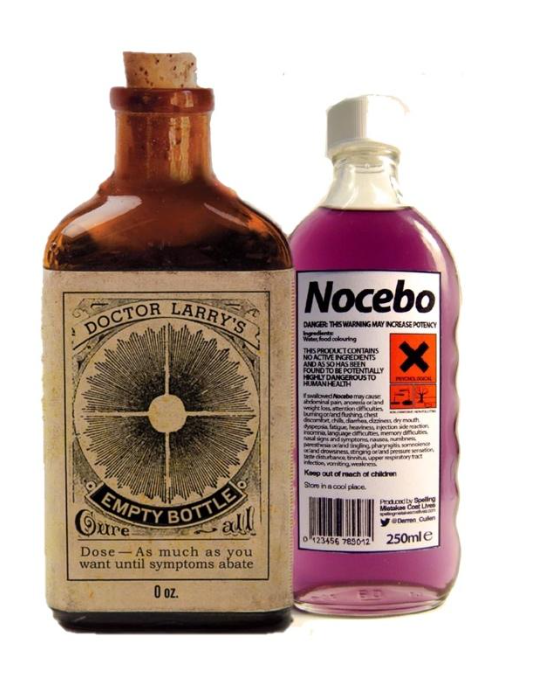
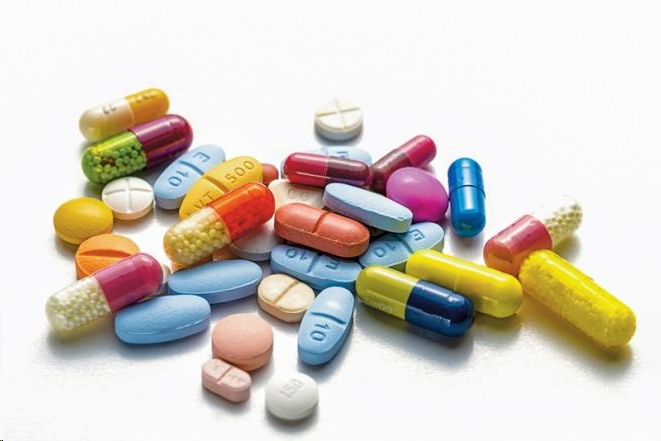
We’ve all heard of the placebo effect.   Some conditions such as depression have a strikingly high placebo rate (30-50%), raising the bar for therapies.  But what is it?  Is there a physiological basis?  Can we bottle it?  Oh wait, someone has…

Join Alex Straiker (senior research scientist at the Gill Institute for Neuroscience) for a visit to the brave new world of the placebo, the nocebo and the zeebo.

Science Cafe, February 24, 2026: Sleep

with Abhilash Lakshman, PhD, Shafer Lab

With every rotation of the earth, we cycle from the “unrecorded fantasies of solitary dreaming, to the collective fantasy of daily social and commercial life.”
 
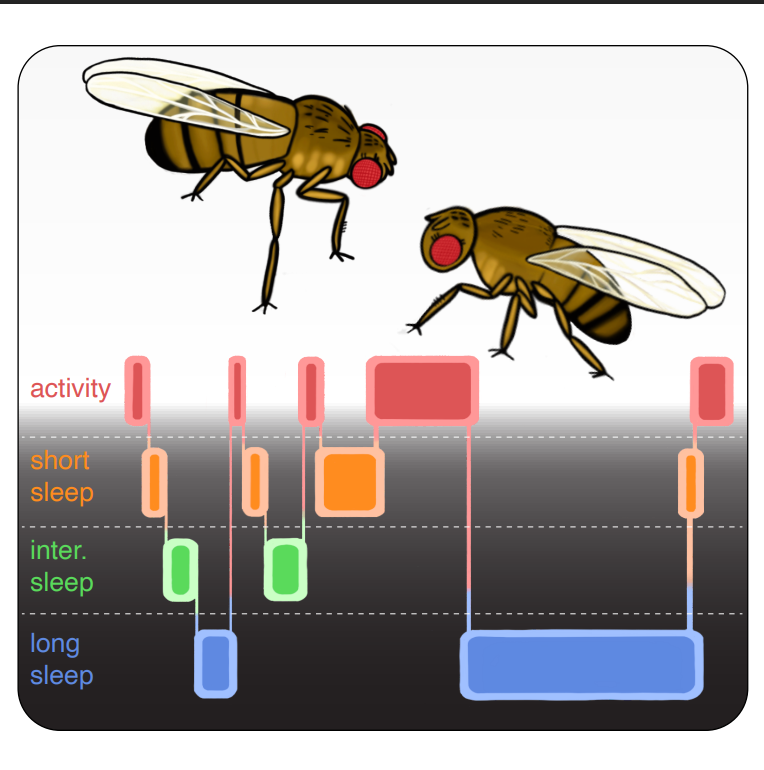
What determines when and how much we sleep?  How does light influence sleep timing and levels?
 
Join us as we talk about how tiny insects help us answer these questions.

Science Cafe, November 11, 2025: Tinnitus

What’s that sound?? Tinnitus has a (not so) nice ring to it

with Travis Riffle, AuD, PhD, CCC-A

Tinnitus, or ringing in the ears, is the phantom perception of sound that cannot be attributed to any external or environmental source. It’s a phenomenon that has frustrated us for thousands of years, and still continues to affect millions of people today. But what is tinnitus? Why is it so annoying, and why haven’t we cured it yet? Join us as we discuss the (proposed) underlying mechanisms, what research has (and hasn’t) figured out, and some interesting ways that we (try to) treat it.

Science Cafe, October 21, 2025: Tylenol

Acetaminophen: The Knowns and Mostly Unknowns

with Misha Dvorakova

Acetaminophen (known under its brand name Tylenol) is one of the world’s most common medicines used daily to treat pain and fever. But how much do we really know about it? From its 19th-century discovery to the infamous 1982 Tylenol murders, acetaminophen has a fascinating story that blends science, history, ethics and public health.

Join us as we explore its mysterious biology, its benefits and risks, the medical dilemmas it raises, and its impact on medicine, regulation and society.

Science Cafe, September 25, 2024: Pheromones

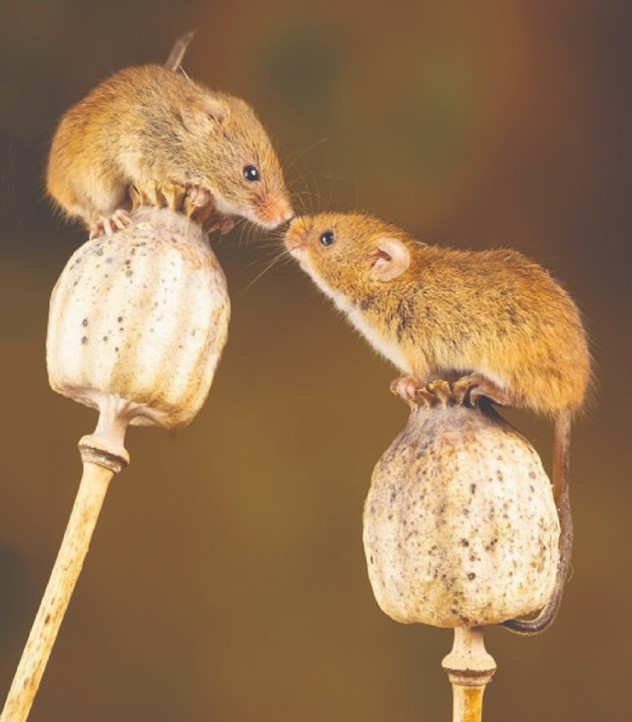
Many animals make use of pheromones to communicate a wide range of information such as their identity, emotional state, mating status and much more. 

Join Alex Straiker and Natalia Murataeva for a survey of pheromones including some of their own work in mice.

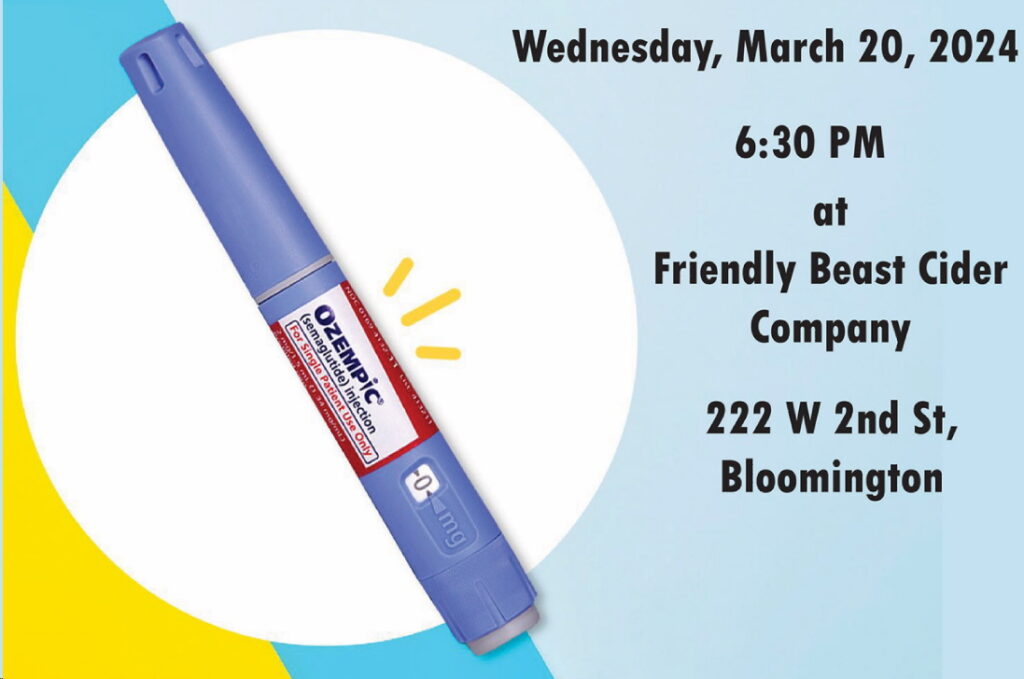
Science Cafe, March 20, 2024: The Way to Ozempic

Our quest for weight-reducing prescription drugs

our quest for weight-reducing prescription drugs

We humans are more susceptible to obesity than any other mammal. While this trait served a vital purpose in pre-agricultural times, it has evolved into a significant public health issue in modern societies. Developing pharmacological therapies for obesity has been a formidable challenge, marked by numerous ineffective and sometimes hazardous interventions. However, Ozempic, a pioneering drug belonging to the GLP-1 agonist class, has recently emerged as a safe and effective approach to weight reduction. In this science café discussion, we’ll delve into why Ozempic works, how Ozempic works, and whether it lives up to the unprecedented hype.

Dr. Gergö Szanda is our presenter this month.  Dr. Szanda is a Gill Center Research Scientist

The Trouble with Psychotherapeutic Drugs

February 19, 7:00pm

Many drugs are available to treat schizophrenia, depression, and anxiety, but the drugs are far from effective.  And after more than 70 years of searching for effective drug therapies, we still have little insight into the underlying mechanisms of mental illness.  The trouble lies, at least in part, in how the drugs were developed and how modern medicine operates.

George Rebec is Chancellor’s Professor Emeritus, Psychological and Brain Sciences

October 16th: Neurobiology of Obesity

The obesity epidemic is sweeping the globe. Find out how the body regulates weight, why it’s so difficult to keep weight off, and what this means for health outcomes and the future of obesity.

Dr. Natasha Murataeva received her PhD in neuroscience from IU

Several things to note:
1) We’re starting at 7pm
2) We’re on the 3rd Wednesday
3) We’re at Hopscotch on Morton & Dodds
4) Hopscotch doesn’t have much food, which is why we’re beginning at 7pm (They do have great coffee, tea, beer, and pastries all the time.)

Wednesday, April 17th: The Science of Cannabis

Dr. Alex Straiker will be back with a 5-year update on a favorite Science Café topic, the Science of Cannabis. How do cannabinoids work in the body? Are they dangerous? What has changed with the movement to legalize cannabis?

Four things are different from our usual meetings:
1) We’re starting at 7pm
2) We’re at Hopscotch on Morton & Dodds
3) Hopscotch doesn’t traditionally have food, though they’re working on that and we’ll update this event as more information becomes available They do have coffee, tea, beer, and pastries all the time.
4) We’re on the 3rd, rather than 4th Wednesday, so as not to conflict with Green Drinks

Wednesday, January 30th — postponed!

We were all set to hold our next meeting at the Roost on the 30th, when we found out about this lecture: Leading astrophysicist on landmark gravitational wave discovery to speak at IU

So, we’re encouraging Science Cafe aficionados to attend this IU event at 7:30 p.m. in Swain West, Room 119.

We’ll re-schedule Dr Newman’s talk, and will post our February talk soon!

Photo by: Kwame Acheampong |  VIRIN: 181211-F-F3456-9001.JPG

Play is an important way that young children learn. Playing with spatial toys and engaging in spatial activities may prove to be an essential part of the development of spatial thinking. There are a number of studies that have related spatial play with spatial skill and number processing both of which are important for success in STEM (science, technology, engineering and mathematics). I will discuss some evidence in support of the spatial play STEM achievement relationship.

Our speaker is Sharlene Newman, PhD
Professor, Psychological and Brain Sciences (cni.lab.indiana.edu)
Associate Vice Provost for Undergraduate Education (ovpue.indiana.edu)
Director, IU Program in Neuroscience (neuroscience.indiana.edu)